

Product Market Fit Survey
Run PMF Surveys
Inside your Product
to Measure PMF
The Sean Ellis product market fit survey, triggered at the right moment in your product, with every response linked to the user who gave it
No credit card required
Startups that measured and improved their PMF score
The survey above is live, click through it or
Measure: Survey users "How disappointed would you be if you could no longer use [your Product]?"
Benchmark: 40%+ saying "very disappointed" = Strong PMF
Improve: Track it monthly, optimize until you hit 40%
The industry-standard PMF benchmark used by Slack, Superhuman, and 100s of successful startups
Figure out why you do or don't have PMF
Improve the strength of your product market fit
Track how strong your PMF is over time
Know which customer segments love you, which don't, and why
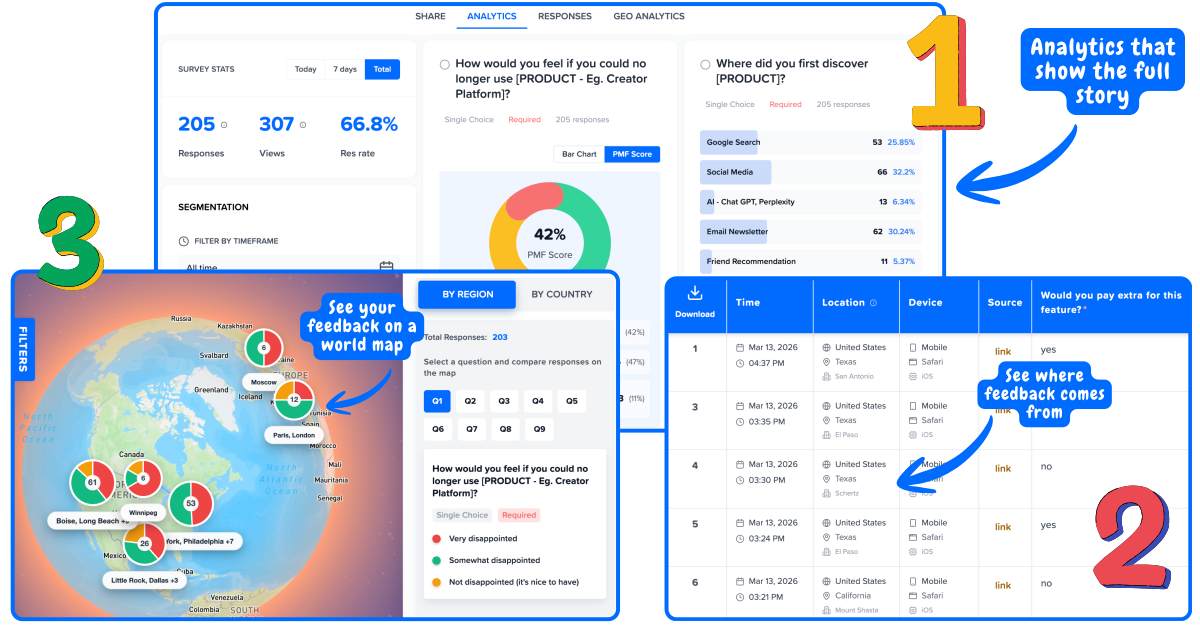
See your PMF on a map
Discover your ideal customer profile
The basics
What is a Product Market Fit Survey?
A product market fit survey asks users how essential your product has become to them, and uses their answers to tell you whether you're ready to scale or still need to iterate.
The Core Question
"How would you feel if you could no longer use [Product]?"
• Very disappointed
• Somewhat disappointed
• Not disappointed
This single question reveals whether your product has become essential, not just useful to your users. It's the core of the Sean Ellis PMF methodology.
Why It Works
NPS tells you if users would recommend you. PMF surveys tell you if users need you. That's the difference between a nice-to-have and a must-have product.
Teams at Dropbox, LogMeIn, and Eventbrite ran this survey. After analyzing 100+ startups, one number emerged that predicted sustainable growth better than anything else.
That number is 40%.
Analyze
Track Product Market Fit by
User Segment, not just overall
Run surveys inside your product. Every response linked to a user and location. Spot the patterns that matter.
Read your score
The 40% Benchmark
How to Interpret Your PMF Score
If 40%+ of active users say they'd be "very disappointed" without your product, you have strong PMF. Here's what every score range means.
You're ready to scale. Invest in acquisition, double down on what your champions love, and protect what's working.
You have signal. Find the segment that loves you most, understand why, and build toward them. You're closer than most.
Don't scale yet, you'll be paying to churn users. Use the qualitative feedback to identify what needs to change first.
Important: Don't survey all signups. Survey users who have experienced your core value - active users who've used the product at least twice in the past two weeks. You need at least 40 responses for the score to be statistically meaningful.
The questions
The 4 Product Market Fit Survey Questions
That Tell You Everything
These four questions tell you who your champions are, what they value, and what to build next, beyond just the 40% score.
How would you feel if you could no longer use [Product]?
Multiple choice: Very disappointed / Somewhat disappointed / Not disappointed
This is your PMF score. Count "very disappointed" ÷ total responses.
What type of people do you think would benefit most from [Product]?
Open-ended
Your champions self-describe your ideal customer profile better than any persona exercise.
What is the main benefit you receive from [Product]?
Open-ended
Your value proposition, in your customers' own words. Use this in your marketing copy.
How can we improve [Product] for you?
Open-ended
Shows what's blocking "somewhat disappointed" users from becoming champions.
Free template
Ready to use
Product Market Fit Survey Template
Use this free product market fit survey template to run the Sean Ellis 40% test in minutes. Same template Superhuman, Slack, and Dropbox used to find PMF.
PMF Survey Template
Sean Ellis 40% test · 4 questions · 2 min
Question 1 · Multiple choice
How would you feel if you could no longer use [Product]?
○ Very disappointed ○ Somewhat disappointed ○ Not disappointed
Question 2 · Open text
What type of people do you think would benefit most from [Product]?
Question 3 · Open text
What is the main benefit you receive from [Product]?
Question 4 · Open text
How can we improve [Product] for you?
Survey Active Users
Send to users who have used your product at least twice in the past two weeks. These are the people who've experienced your core value. Target 40–200 responses for reliable signal.
Calculate Your Score
Divide the number of "very disappointed" responses by total responses. That's your PMF score. Above 40% = strong fit. Below 40% = keep iterating before you scale.
Segment Your Champions
Filter to "very disappointed" users only. What do they have in common? Job title, company size, use case, plan type? That shared trait is your ideal customer profile.
Build Toward Champions
Read their open-ended answers. Double down on what they love. Then look at "somewhat disappointed" users - what one change would convert them? Repeat monthly and track your score over time.
Send your PMF survey 30 days after sign-up
New users need time to experience your core value before they can answer meaningfully. 30 days is the sweet spot - long enough that they've formed an opinion, short enough that the experience is still fresh. With Mapster you can set this up once and have it trigger automatically for every new user.
Segment your score
PMF Isn't Binary
It's Different for Every Segment
You might have 60% PMF with one segment and 15% with another. You just haven't measured it yet.
Measure PMF by User Segment
With Mapster you can survey your customers and segment by plan type, geography, usage frequency, company size, or any custom attribute
See PMF scores per segment and identify which cohorts have strong PMF
Understand what they value through qualitative feedback on features, pain points, and alternatives
The Framework behind successful startups
How Slack, Superhuman, and 100s of
Startups Got Strategies to Reach PMF
They didn't guess. They measured, got strategies, executed, and repeated until they hit 40%.
Run your PMF survey and hit the 40% benchmark
Send the Sean Ellis question to your users, segment by cohort and plan, and see exactly where product-market fit is strongest.
Deploy Your PMF Survey FreeNo credit card required