

Customer Experience Survey Tool
Customer Experience Surveys for SaaS and Startups
Three surveys. Every touchpoint. Every answer tied to a real user.
Most CX surveys give you an average. Averages hide which plan tier is churning, which support agent is struggling, and which feature is creating friction. Mapster links every response to the user who submitted it - so you can segment, not just report.
No credit card required
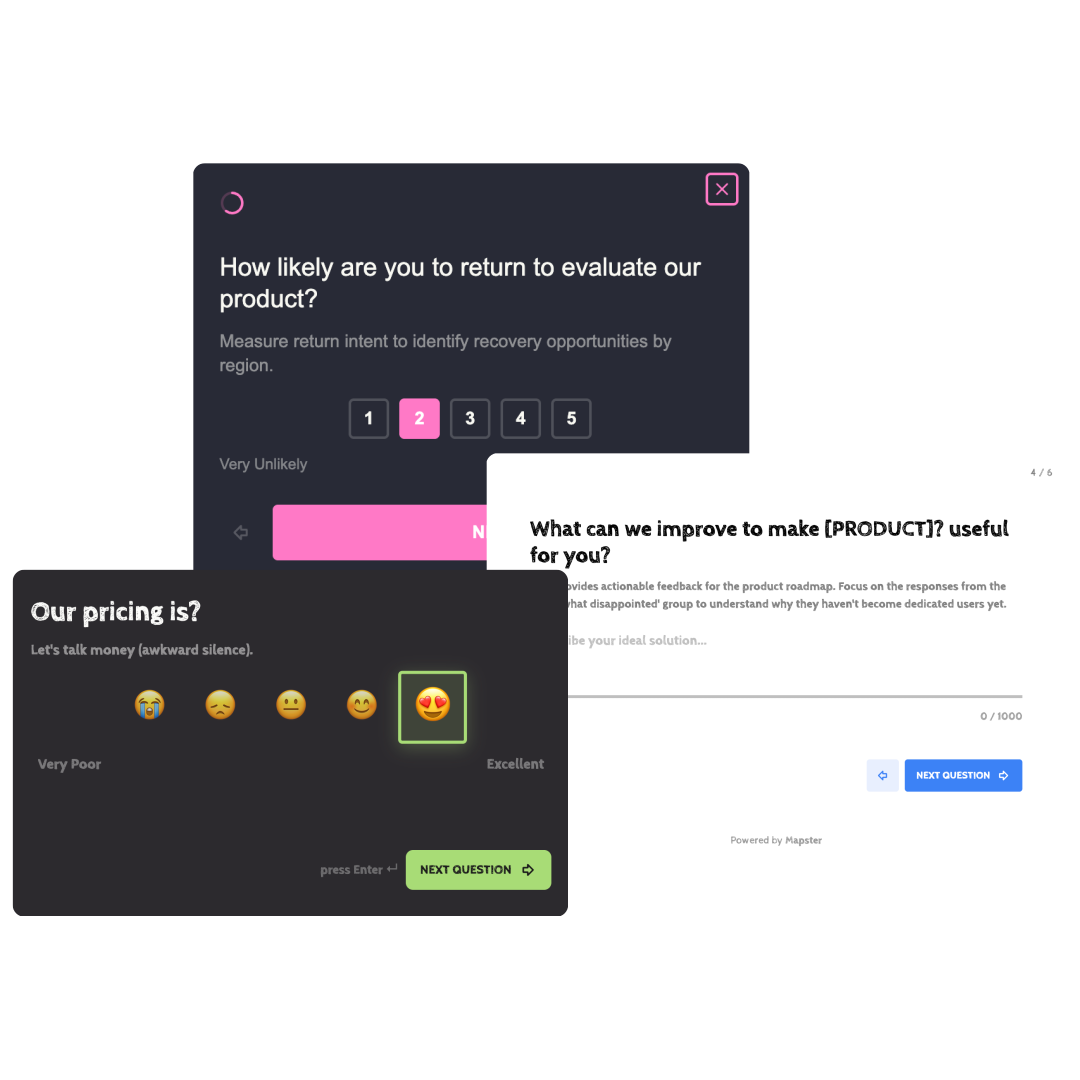
The three customer experience surveys
Customer experience is not one number. It is three metrics, each measuring a different dimension - at different moments in the journey.
NPS
Net Promoter Score
"How likely are you to recommend us?" (0–10)
When: Quarterly
Measures: Overall loyalty and relationship health. The leading indicator of retention and referral growth.
CSAT
Customer Satisfaction Score
"How satisfied were you with [interaction]?" (1–5)
When: After every touchpoint
Measures: Satisfaction with a specific interaction - support, onboarding, feature release. Identifies which touchpoints are failing.
CES
Customer Effort Score
"How easy was it to [complete task]?" (1–7)
When: After high-effort tasks
Measures: Friction in your product or support process. High effort predicts churn better than low satisfaction.
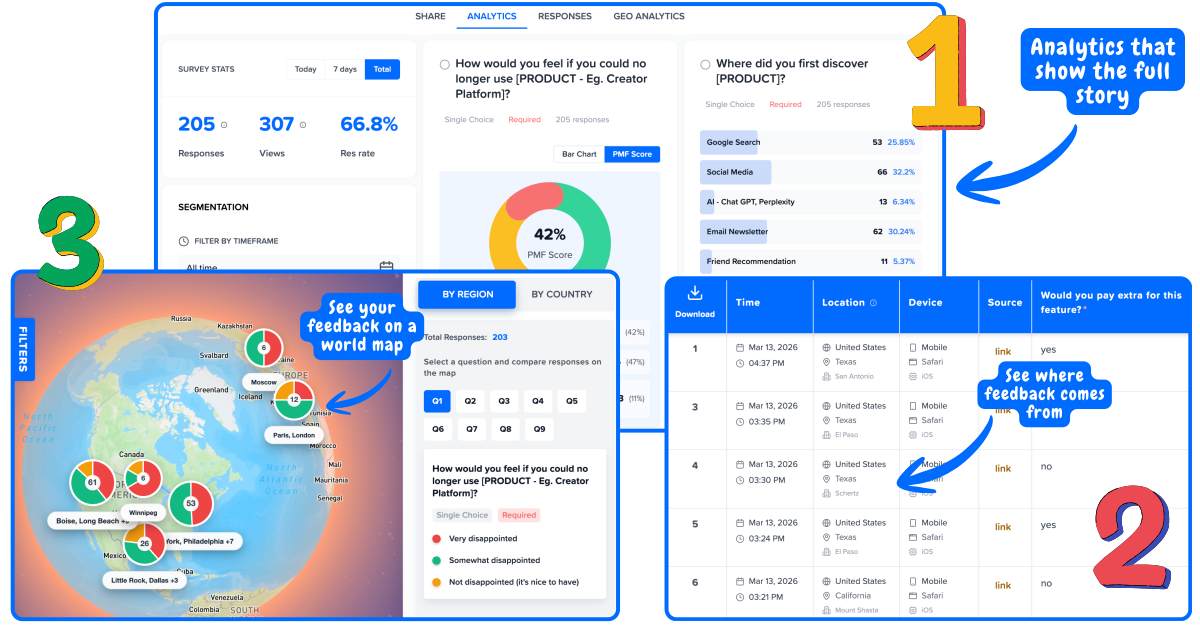
Customer experience survey questions
One question per survey. One follow-up to make it actionable.
Loyalty
Quarterly"On a scale of 0 to 10, how likely are you to recommend [company] to a friend or colleague?"
Follow-up: "What is the main reason for your score?"
Keep the wording exact - changing the scale or phrasing breaks comparability with industry benchmarks.
Satisfaction
After each touchpoint"How satisfied were you with [support interaction / onboarding / feature]?" (1–5)
Follow-up: "What could we have done better?" (for scores 1–3) / "What did we do well?" (for scores 4–5)
Send within 24 hours. Recall fades quickly - satisfaction scores drop in accuracy after 48 hours.
Effort
After high-effort tasks"The company made it easy to handle my issue." (1–7 agreement scale)
Follow-up: "What made this difficult?" (for scores 1–4)
CES is the strongest predictor of churn at the interaction level. Prioritise this after setup, support, and checkout.
Open-ended
After any score"What is the one thing we could do to improve your experience?"
Follow-up: No follow-up needed - this is itself the follow-up.
The qualitative answer is where the specific action item lives. Use after NPS, CSAT, and CES surveys.
“How was your experience?” survey variations
The conversational form of a CSAT question. The right wording depends on the touchpoint - here are the six variations and when each one fits.
"How was your experience with [Product] today?"
General post-session
Send 24 hours after a product session or trial activation. Broad enough to catch first impressions without anchoring to a specific feature.
"How was your experience with our support team?"
Post-support ticket
Send within 1 hour of ticket resolution. Support satisfaction decays the fastest - delay beyond 24 hours and scores drop in accuracy.
"How was your experience setting up [Feature]?"
Post-feature setup
Trigger at the end of an onboarding flow or setup wizard. Captures friction while the experience is still in memory. Pairs well with a CES follow-up.
"How satisfied were you with [interaction]?"
Formal CSAT phrasing
The standard CSAT wording. Use when benchmarking against industry data - the formal phrasing aligns with how CSAT scores are published in benchmark reports.
"How would you rate your overall experience?"
End-of-interaction
Use in transactional contexts like checkout, upgrade, or account setup flows. Neutral and expectation-agnostic - does not anchor the respondent toward satisfaction or effort.
"What is the one thing that would have made your experience better?"
Open-ended follow-up
Always send as a follow-up to any rated experience question for scores of 3 or below. The qualitative answer is where the actionable signal is - not the number.
Segment your “how was your experience” responses
A “how was your experience” survey score of 4.1 out of 5 looks healthy until you segment it. Mapster links every response to the user who submitted it, so you can filter by plan tier, support agent, feature used, or user role. A 4.1 overall can hide a 2.8 for enterprise accounts on the setup flow - the number that actually needs action.
See how Mapster segments experience scores →When to send CX surveys
Triggered surveys outperform batch email surveys on response rate and data quality. Match the survey type to the moment.
Relationship NPS
Quarterly - full customer base
Tracks overall loyalty trends over time. The directional change across quarters matters more than the absolute score. Send at the same time each quarter so scores are comparable period over period.
Onboarding NPS or CSAT
30 days after onboarding completes
Captures first impressions after customers have experienced core value. Low scores here predict early churn - they signal activation problems before they accumulate into cancellations.
Support CSAT + CES
Immediately after support ticket resolution
Run CSAT to measure how satisfied they were with the outcome, and CES to measure how much effort the process required. A customer can be satisfied but exhausted - CES catches what CSAT misses.
Feature CSAT or CES
After first use of a key feature
Measures whether the feature delivered on its promise. Segment by user type to find which cohorts find it valuable vs confusing - and where your documentation or UX needs work before the feature reaches everyone.
Purchase CES
After checkout or upgrade flow
Buying friction creates regret and seeds churn at the moment of highest commitment. CES after upgrade flows reveals where your pricing page, payment form, or contract process is creating unnecessary effort.
Renewal NPS
60–90 days before renewal
Early warning system for at-risk accounts. Gives your customer success team time to intervene before the renewal conversation - not during it. Detractors identified 60 days early are recoverable.
Frequently Asked Questions
What is a customer experience survey?
A customer experience survey measures how customers perceive your product across specific touchpoints - not as a single annual questionnaire, but as triggered micro-surveys after each interaction. The three standard types are NPS (loyalty, quarterly), CSAT (satisfaction, post-touchpoint), and CES (effort, post-task). Together they give a complete picture of CX health.
What questions should a customer experience survey include?
The four core questions: "How likely are you to recommend us?" (NPS, 0–10) for loyalty. "How satisfied were you with [interaction]?" (CSAT, 1–5) for touchpoint satisfaction. "How easy was it to [complete task]?" (CES, 1–7) for friction. "What is the one thing we could do to improve your experience?" as an open-ended follow-up after any score.
What is the difference between a consumer experience survey and a customer experience survey?
The terms are used interchangeably. "Consumer experience survey" tends to appear in B2C and retail contexts; "customer experience survey" is more common in B2B SaaS. The survey types, questions, and timing are identical - NPS for loyalty, CSAT for satisfaction, CES for effort. The audience and context change but the measurement approach does not.
How many questions should a CX survey have?
One core rating question plus one optional open-ended follow-up. For NPS: the 0–10 question plus "What is the main reason for your score?" For CSAT: the 1–5 question plus "What could we have done better?" For CES: the 1–7 statement plus "What made this difficult?" Longer surveys reduce completion rates significantly when sent immediately after an interaction.
How do I segment customer experience survey results?
Segment by plan tier, role, cohort, interaction type, and support agent. An overall CSAT of 82% can hide a billing support score of 61% or an enterprise tier score of 67%. Mapster links every response to the user who submitted it so you can filter and compare CX scores across any attribute without manual exports.
Start measuring customer experience today
Run NPS, CSAT, and CES surveys inside your product. Every response tied to a real user - segment by plan, role, or touchpoint without exporting anything. Free to start.
Launch Free CX SurveyNo credit card required